








Helen Cody showed us how to make a face mask at home in six simple steps
By IMAGE
28th Mar 2021
28th Mar 2021
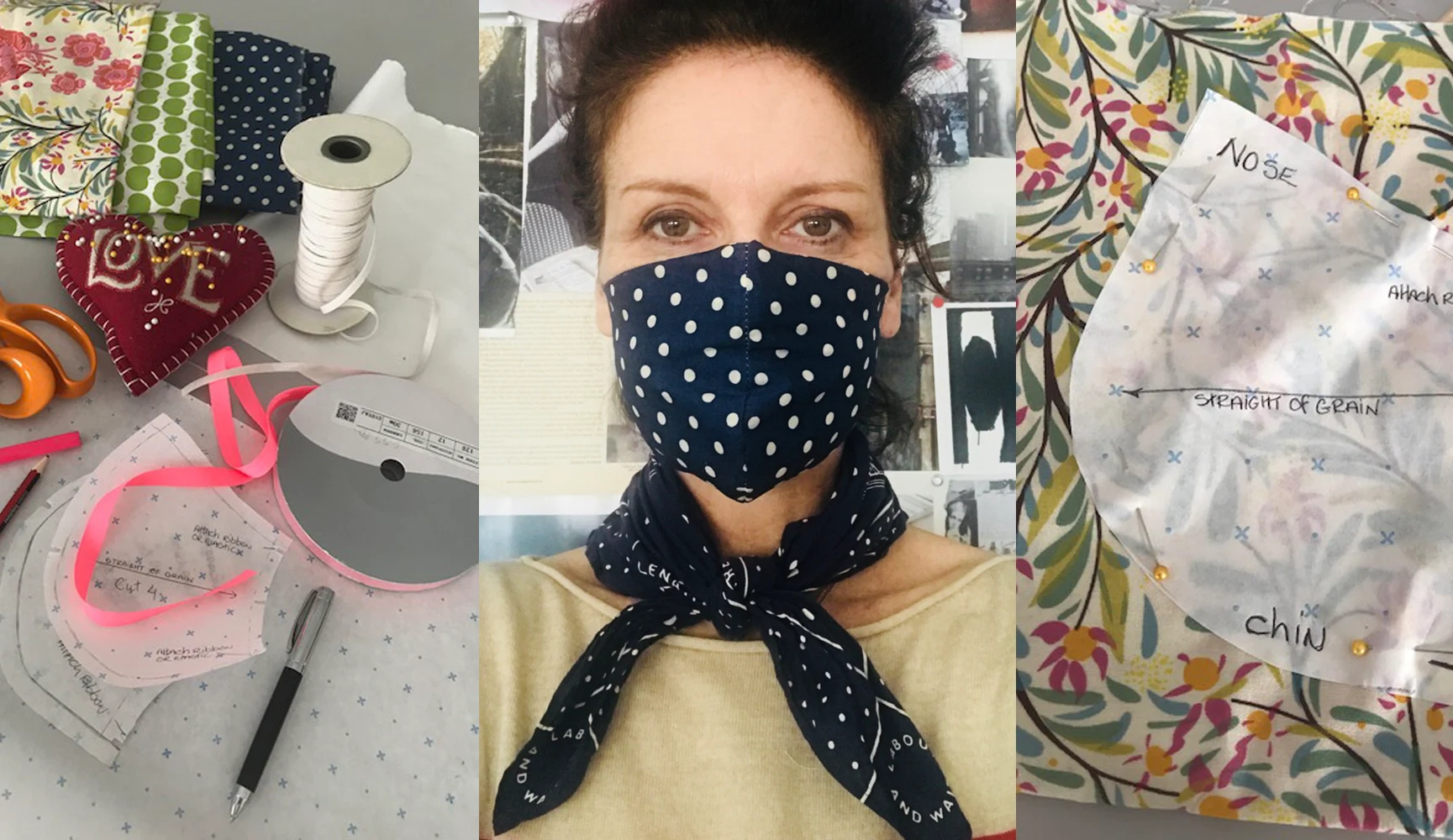
Helen Cody is one of the most celebrated and recognised fashion designers working in Ireland today. Here she gives IMAGE a step-by-step guide to making a face mask at home.
While it has been proven that face masks provide little protection for the wearer, they can prevent the spread of the virus when worn by carriers. This is especially relevant when combined with recent US Centres for Disease Control and Prevention (CDC) data which shows high rates of transmission by people who are infected by coronavirus but do not know it yet.
At the time of writing, the HSE’s website advises that wearing facemasks “is unlikely to be of any benefit if you are not sick”. Current World Health Organisation (WHO) recommendations are that face masks may prevent the spread of disease if worn when someone has a cough or coronavirus symptoms but states this advice is constantly under review.
Homemade masks are no substitute for surgical masks or respirators. However surgical masks and respirators across the world need to be conserved for health care and front line workers. Homemade masks are most effective when combined with regular hand-washing, physical distancing, self-isolation and cocooning. Wearing a home-made mask will not guarantee protection against coronavirus.
WHAT YOU WILL NEED
Scissors
Pencil
Pins
Paper
Needle and thread or sewing machine
Ribbon or ideally narrow elastic if you have it
Fabric* (heavyweight pieces of cotton with a thread count of 180 or more are best— these are thicker and less likely to allow particles through)
STEPS
1. Print pattern provided below onto an A4 piece of paper
2. Pin four layers of the fabric to the piece of paper and cut around
3. Sew curved edges together in pairs, then trim edges with scissors
4. You should now have two pieces that are starting to look like masks, these will provide the two layers of your face mask. The outer fabric is currently on the inside. Sew the two pieces together along the curved edges again (outer fabric remaining on inside). Leave a gap big enough at the base to turn the ‘ bagged out’ mask so the outer sides of the fabric are facing outwards. You can then sew up the gap.
5. You don’t have to, but top-stitching the outer edge will strengthen this and as you are doing this you can attach the ribbon or elastic (back-stitching the ribbon several times ) where it’s marked on the pattern.
6. Once you have made the shape, pin the elastic to comfortable length and back-stitch into position.
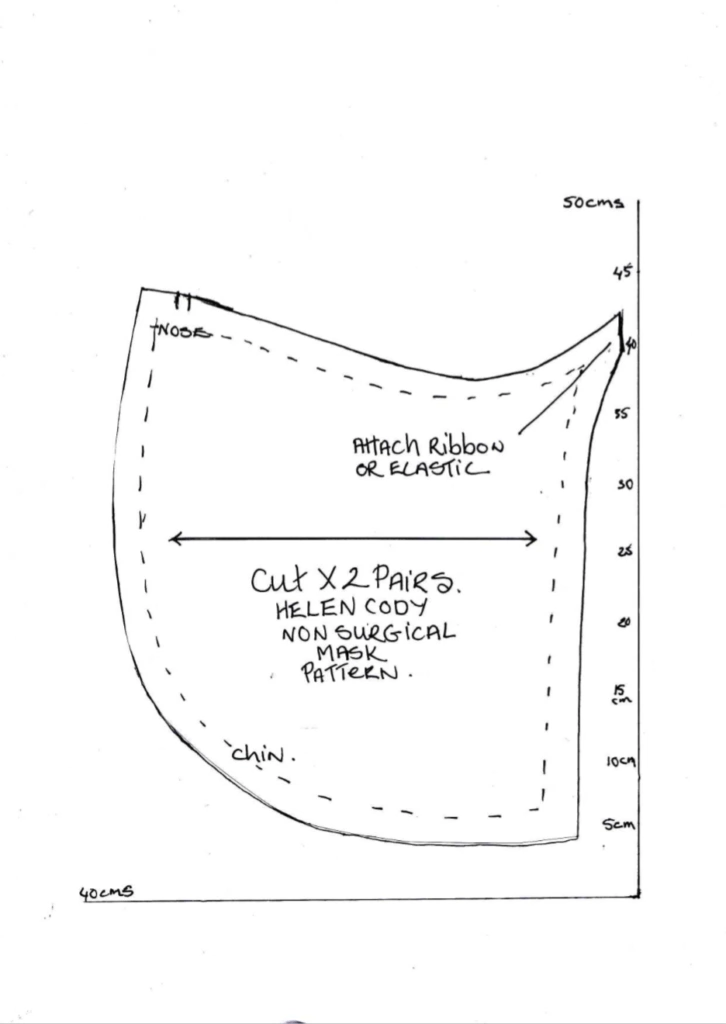
Fabric*
If you want to make a homemade mask, you need to be mindful of the type of material you use. According to a U.S study by Dr. Scott Segal, the best materials for homemade masks are heavyweight cottons with a thread count of 180 or more — these are thicker and less likely to allow particles through.
The least effective materials were found to be scarves and bandanas —however, layering these materials with coffee filters was found to increase their effectiveness. You can also fold these materials over each other to create a thicker barrier between your face and any droplets.
An easy way to gauge how suitable a material is to use as a mask is to hold it up to a bright light. If the light passes easily through the fibers of the material, it will be less effective than one that is denser and allows less light through.
Related Stories



Also Read